Dog-Ear Fence Installation: The Standard Wood Privacy Fence, Built Right
A dog-ear fence is a wood privacy fence whose pickets have the two top corners clipped off at an angle. It is the style most Charlotte-area homeowners picture when they ask for a wood privacy fence, and it suits anyone who wants full backyard screening without paying for decorative extras.
What Makes a Fence Dog-Ear
The name comes from the picket. Each board has its top corners cut at roughly 45 degrees, which leaves a short flat on top and two small bevels. The cut is not only for looks. A square corner on a wet board is the first place to split and curl, and trimming it off gives the picket a cleaner edge as it ages.
Everything else about the fence is ordinary privacy construction: posts in the ground, horizontal rails between them, and pickets fastened side by side to the rails. Because the pickets come from the mill already dog-eared, there is no extra labor in the style. That is why it tends to be the least expensive way to get a full-height wood privacy fence.
Dog-Ear Fences: Specifications
| Heights we build | 6 ft and 8 ft privacy |
|---|---|
| Picket top | Corners clipped at about 45 degrees |
| Picket layout | Side by side, butted tight at install |
| Rails | Three on a 6 ft fence, more on 8 ft |
| Common lumber | Pressure-treated pine or cedar pickets |
| Upgrade options | Cap and trim, steel posts |
Best Uses for Dog-Ear Fences
- Backyard privacy on a sensible budget
- Keeping dogs and kids in the yard
- Neighborhoods with a standard wood fence rule
- Long fence lines where cost per foot matters
- Screening a patio, pool deck or hot tub
6 ft and 8 ft Dog-Ear Privacy Builds
We build dog-ear privacy fences at 6 ft and at 8 ft. Six feet is what most backyards get. It blocks the view from a neighboring patio and keeps most dogs in.
Eight feet is a different fence structurally. The pickets catch a lot more wind, so the frame has to be heavier: an extra rail, deeper post holes, and stouter posts than a 6 ft fence would need. People choose it when a neighbor's deck or second-story windows look down into the yard, or when the lot backs up to a busy road. Taller fences can also run into zoning or HOA height limits, so we check what your address allows before any lumber is ordered.
Adding a Cap and Trim to Dog-Ear Pickets
Cap and trim is the upgrade most people ask about. A flat cap board runs along the top of the fence, and a trim board is fastened across the face of the pickets just below it. The result reads as a finished piece of carpentry instead of a row of boards.
The cap does some practical work too. It covers the end grain at the top of every picket, which is where rainwater soaks in fastest, and it ties the top of the fence together so individual pickets are less free to twist. It adds lumber and labor, so expect a cap and trim fence to price above a plain dog-ear run of the same length.
How We Install a Dog-Ear Fence
Installation starts with the fence line. We confirm where the fence goes with you, have underground utilities marked, and string the line so every post lands where it should.
Posts are set in concrete and plumbed. Rails are attached next, and then the pickets are hung one at a time. Building picket by picket, instead of hanging premade panels, lets the fence follow the grade of the yard so there are no triangular gaps under the bottom edge. Gates are framed and braced so they do not sag, and are hung last. We haul off the scrap and the spoil from the post holes before we leave.
- Fence line confirmed and utilities marked
- Posts set in concrete and checked for plumb
- Rails fastened, then pickets hung individually
- Gates framed, braced and hung
- Site cleaned up and debris removed
When a Dog-Ear Fence Is Due for Replacement
A dog-ear fence usually fails from the ground up. Posts rot where they meet the soil, and the first sign is a section that leans or rocks when you push on it. Rails pulling away from posts, pickets that have cupped far enough to open gaps, and gates that drag are the other common signals.
If one or two posts are gone and the rest of the lumber is sound, a repair may be enough. When several posts along a run are soft, new pickets on an old frame is money spent twice. Replacement means pulling the old posts and their concrete footings, hauling everything away, and building the new fence on fresh holes. We do tear-out and rebuild as one job.
Dog-Ear Fences on Charlotte Lots
Red clay is the main thing a wood fence has to deal with here. It drains slowly, so the soil around a post stays wet long after a storm, and then it shrinks and cracks in a dry August. Sound post setting matters more in this soil than the picket style does.
Many yards in Mecklenburg, Gaston, Cabarrus and York counties also slope more than they look. A stick-built dog-ear fence handles that well because each picket can be set to the ground. And because dog-ear is the plain, familiar look, it is the wood style that neighborhood associations most often already have on their approved list. We can give you the drawings and specifications an HOA application normally asks for.
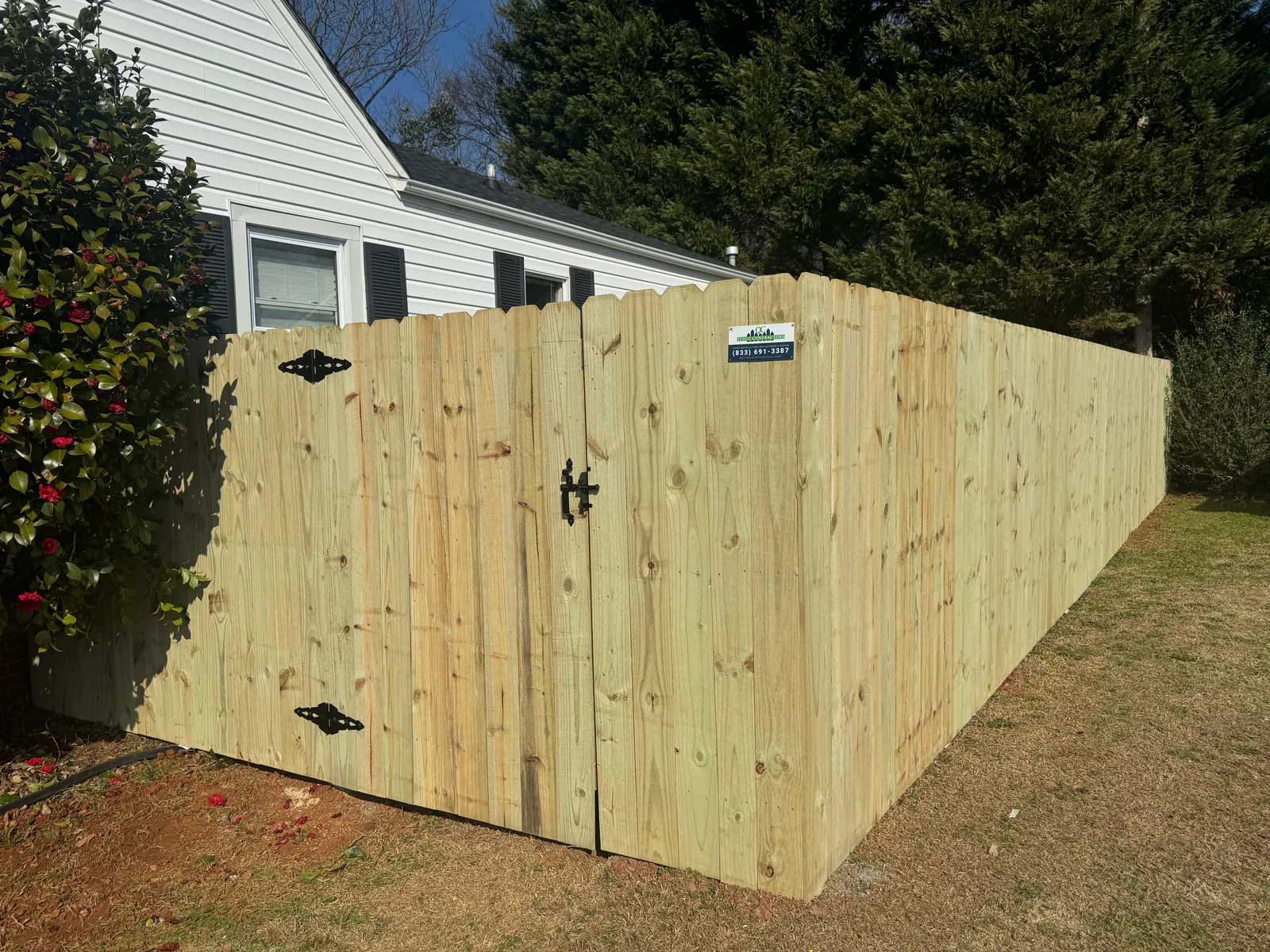
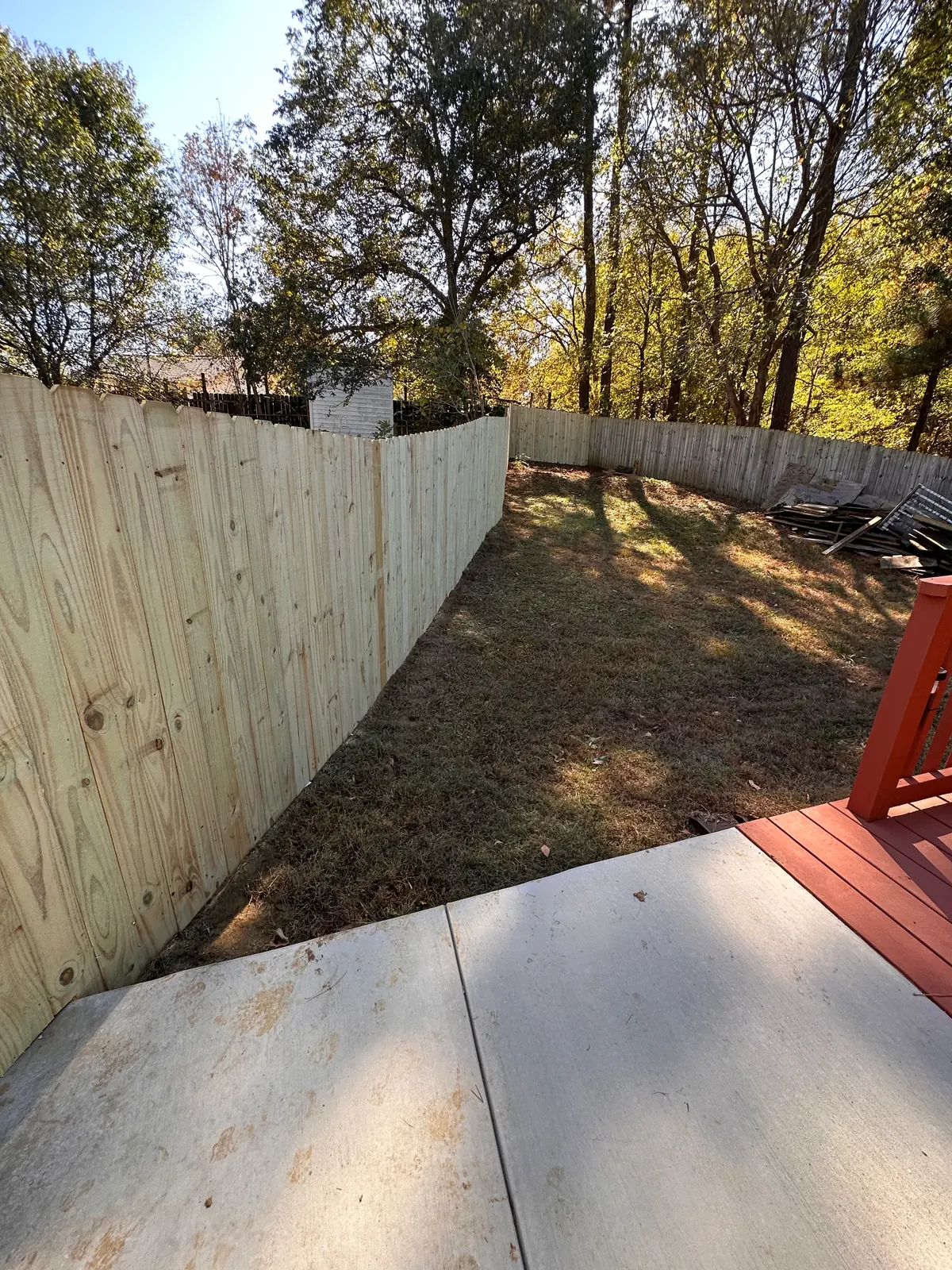
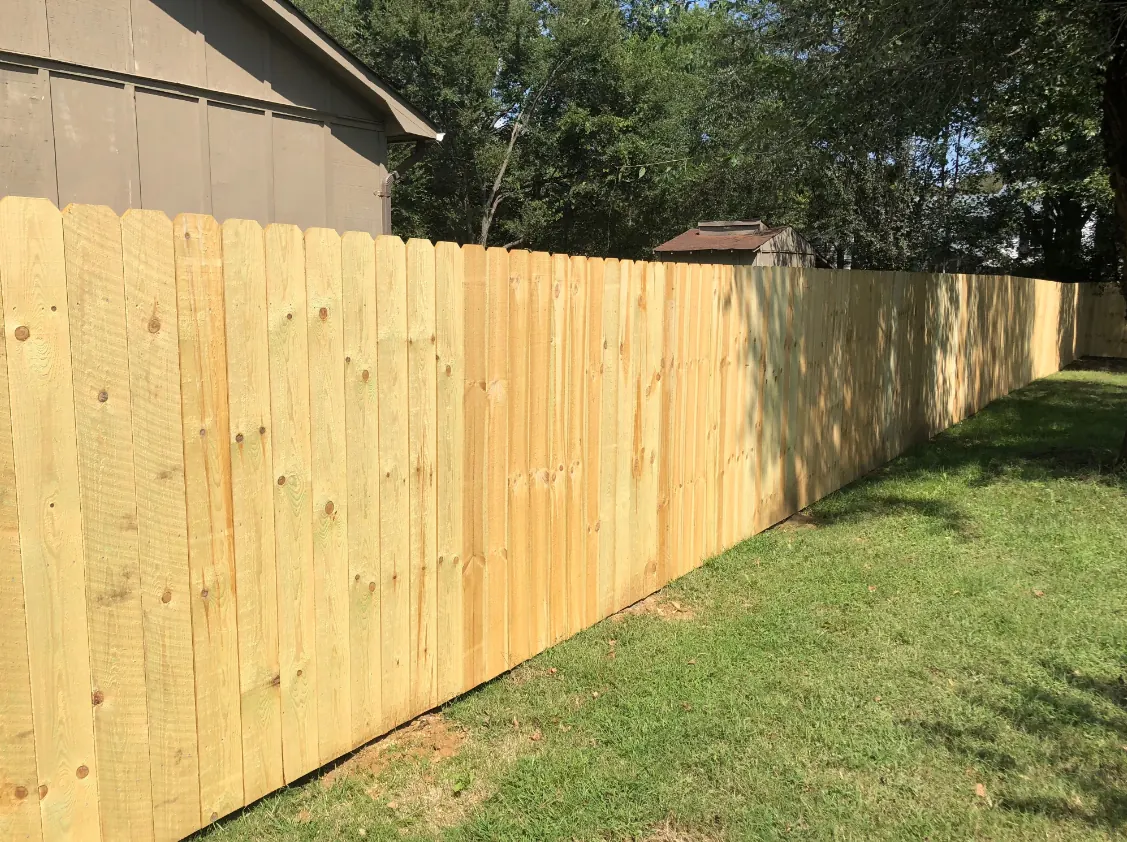
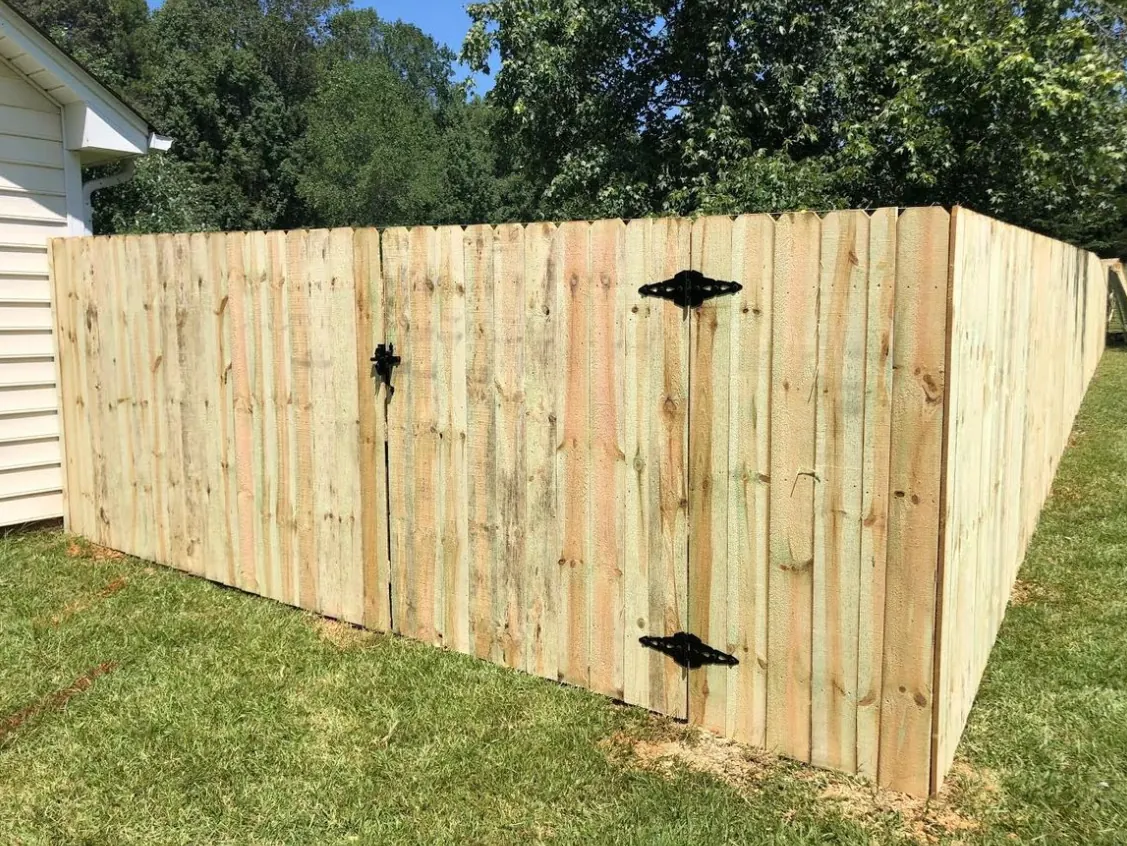
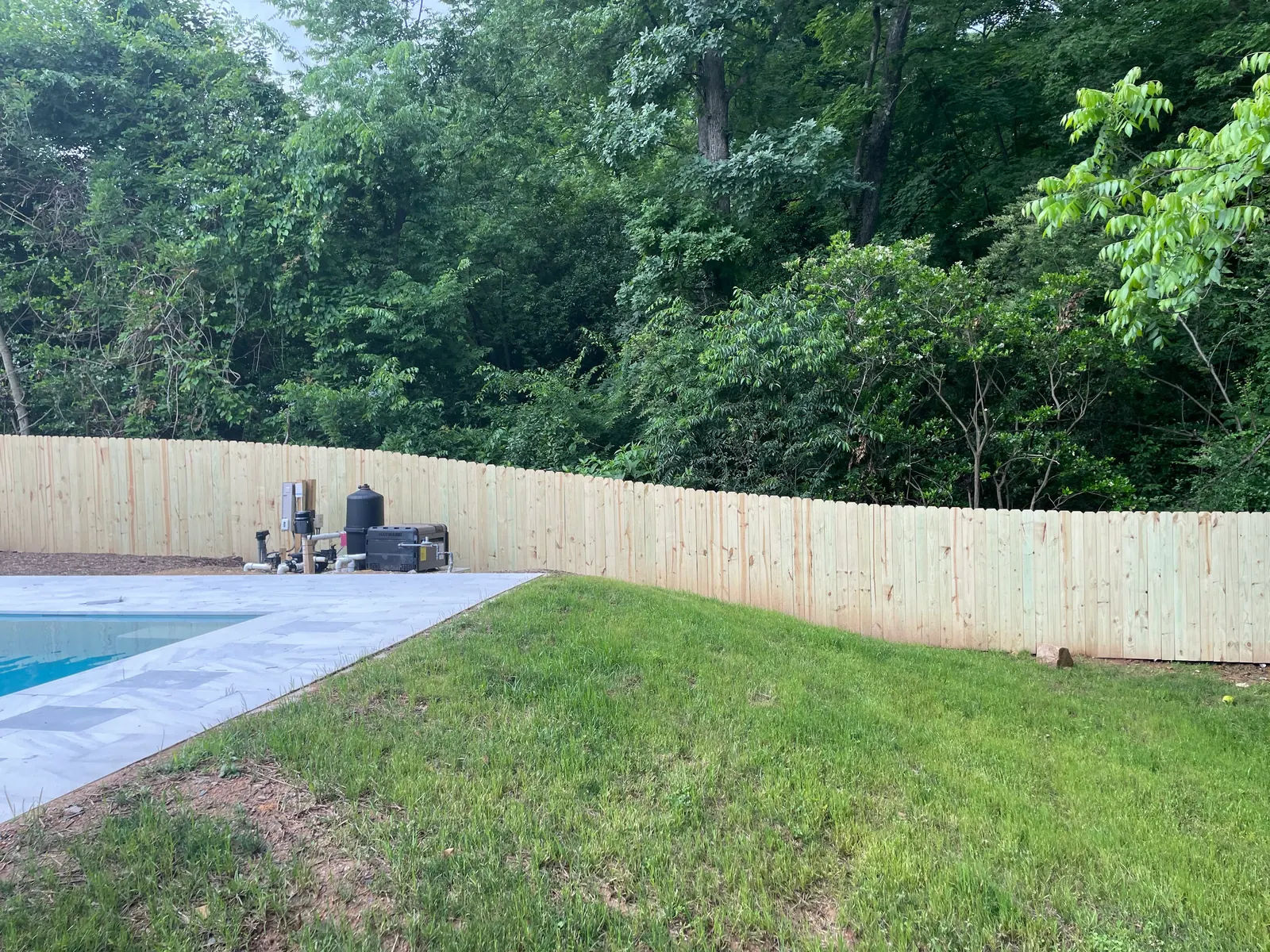
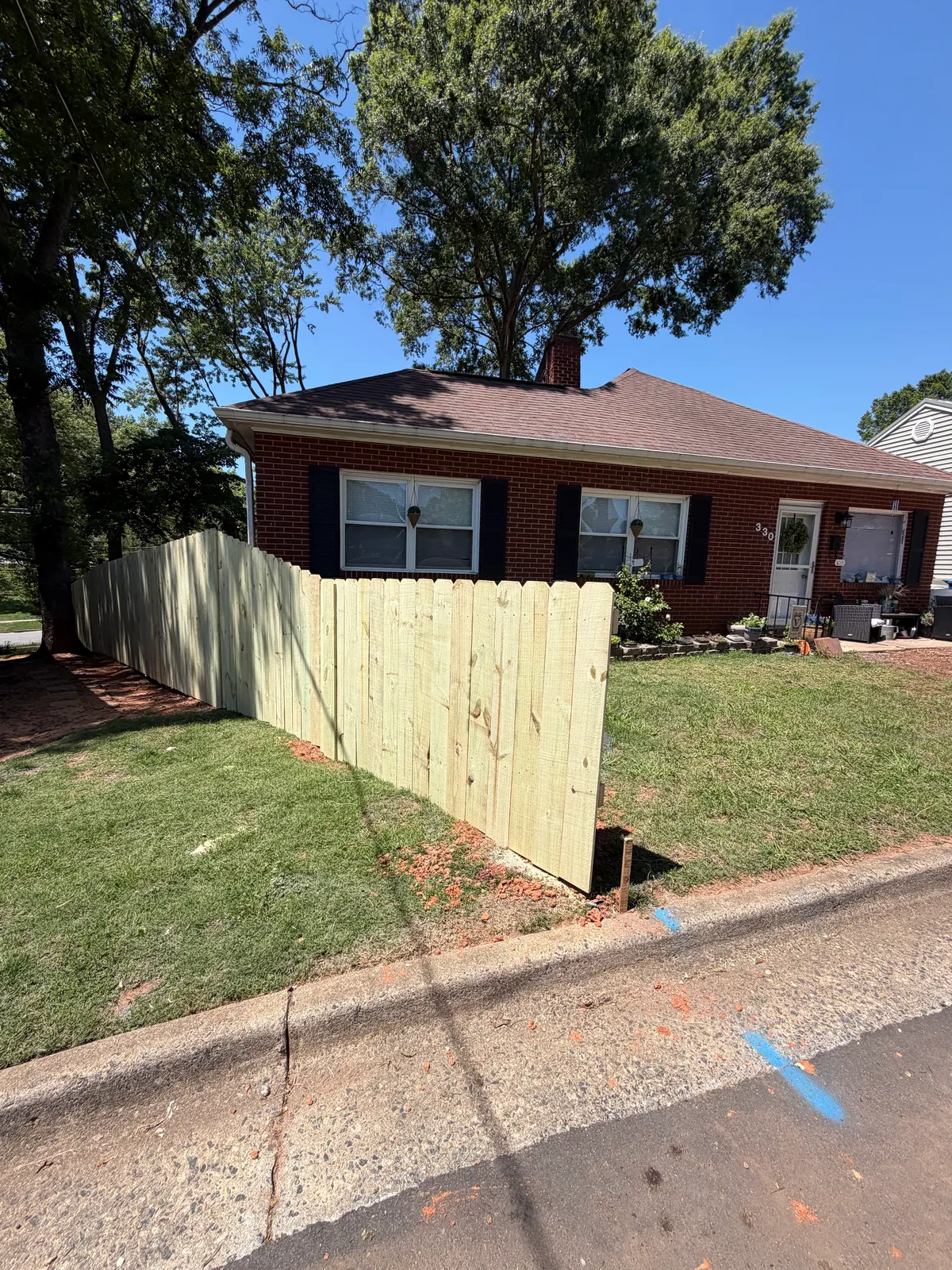
Dog-Ear Fences: Photos From Our Jobs
These are our own installs. See more in the fence installation photo gallery.
Questions About Dog-Ear Fences
What is a dog-ear fence?
It is a wood privacy fence made with pickets that have both top corners cut off at an angle. The pickets are installed vertically, side by side, on horizontal rails. Apart from the clipped corners it is a standard privacy fence, which is why it is usually the most affordable way to enclose a backyard in wood.
Will a dog-ear fence have gaps between the boards?
Small ones, eventually. Pickets are installed tight, but wood shrinks across its width as it dries, so narrow gaps open between boards during the first season. They are usually thin enough that you only see through them up close. If you want no gaps at all, ask us about board-on-board construction, which overlaps the pickets.
Is a dog-ear fence the same as a stockade fence?
They are close cousins. Both are solid fences with vertical boards. A stockade picket traditionally comes to a point, and stockade is often sold as premade panels. A dog-ear picket has a flat top with clipped corners and is normally built on site, one board at a time, which lets it follow the ground more closely.
Should I get a 6 ft or an 8 ft dog-ear fence?
Six feet covers most backyards. Go to eight if a neighbor's deck or upstairs windows look over a 6 ft line, or if you back up to a road. An 8 ft fence needs a heavier frame and costs more per foot. It may also need approval from your town or HOA, which we check before quoting.
What does cap and trim add to a dog-ear fence?
A cap board across the top and a trim board on the face. It gives the fence a finished, framed look and covers the tops of the pickets, where water gets into the end grain. It also stiffens the top edge. It uses more lumber and takes longer to build, so it costs more than a plain fence.
Which side of the fence faces my neighbor?
The usual practice is to face the picket side out, toward the neighbor or the street, with the rails and posts on your side. Many HOAs require it. If you want both sides to look finished, a shadowbox fence or a board-on-board fence with pickets on both faces is the better choice.
Do you stain the fence after it is built?
No. QC Fence Contractors installs and replaces fences and does not offer staining. If you plan to stain or seal the fence yourself or hire a painter, give new pressure-treated lumber time to dry out first. A simple test is to sprinkle water on a picket: when it soaks in instead of beading, the wood is ready.
Related Fences and Services
- Wood Fencing Installation
- Privacy Fencing Installation
- Board-on-Board Fences
- Wood Fences With Metal Posts
- Pressure-Treated Pine Fences
- Residential Fence Installation
Areas We Serve
QC Fence Contractors installs and replaces fencing across the Charlotte metro in North Carolina and South Carolina. Pick the area closest to the property:
- Fence contractors in Belmont, NC
- Fence contractors in Huntersville, NC
- Fence contractors in Charlotte, NC
- Fence contractors in Matthews, NC
- Fence contractors in Ashbrook, NC
- Fence contractors in Harrisburg, NC
- Fence contractors in Concord, NC
- Fence contractors in Rock Hill, SC
- Fence contractors in Ballantyne, NC
- Fence contractors in Gastonia, NC
Listed under Wood Fence Styles in our full list of fence types we install.
Free Estimate: Dog-Ear Fences
Tell us about the property and what you want the fence to do. Or call (833) 691-3387.