Horizontal Fence Installation: Clean Lines That Need a Stronger Frame
A horizontal fence runs its boards side to side between the posts instead of up and down. It suits homeowners who want a modern look for a backyard, patio or front courtyard, and who understand that it has to be framed more carefully than a vertical fence.
What Changes When the Boards Run Sideways
On a vertical fence, each picket is short, stands on end, and hangs from rails. Gravity pulls along its length, so it stays straight. Turn the board on its side and span it between two posts, and gravity now pulls across it. A long board fastened only at its ends will bow in the middle within a couple of seasons.
So a horizontal fence is framed differently. Posts are set closer together, and a vertical backer is usually added partway along each bay to hold the boards flat. The posts are also on show: they break the fence into panels and become part of the design. Get those details right and the lines stay crisp. Skip them and the fence waves.
Horizontal Fences: Specifications
| Heights we build | 4 ft and 6 ft |
|---|---|
| Board direction | Horizontal, level between posts |
| Privacy options | Full privacy, semi-privacy, board on board |
| Post spacing | Closer than a vertical fence |
| Slope handling | Stepped panels |
| Board material | Cedar or pressure-treated pine |
| Post options | Wood or galvanized steel |
Best Uses for Horizontal Fences
- Modern and renovated homes
- Patio and courtyard screens
- Front yards at 4 ft
- Street-facing runs paired with a simpler fence elsewhere
- Level or gently sloped lots
4 ft, 6 ft Privacy and Semi-Privacy Layouts
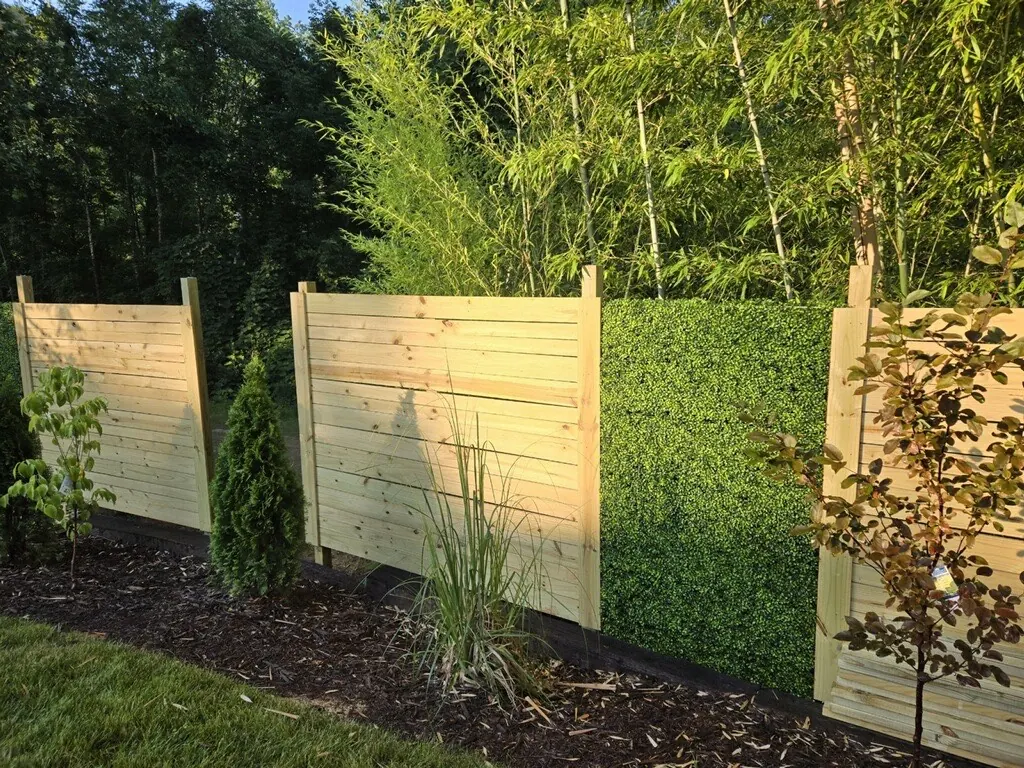
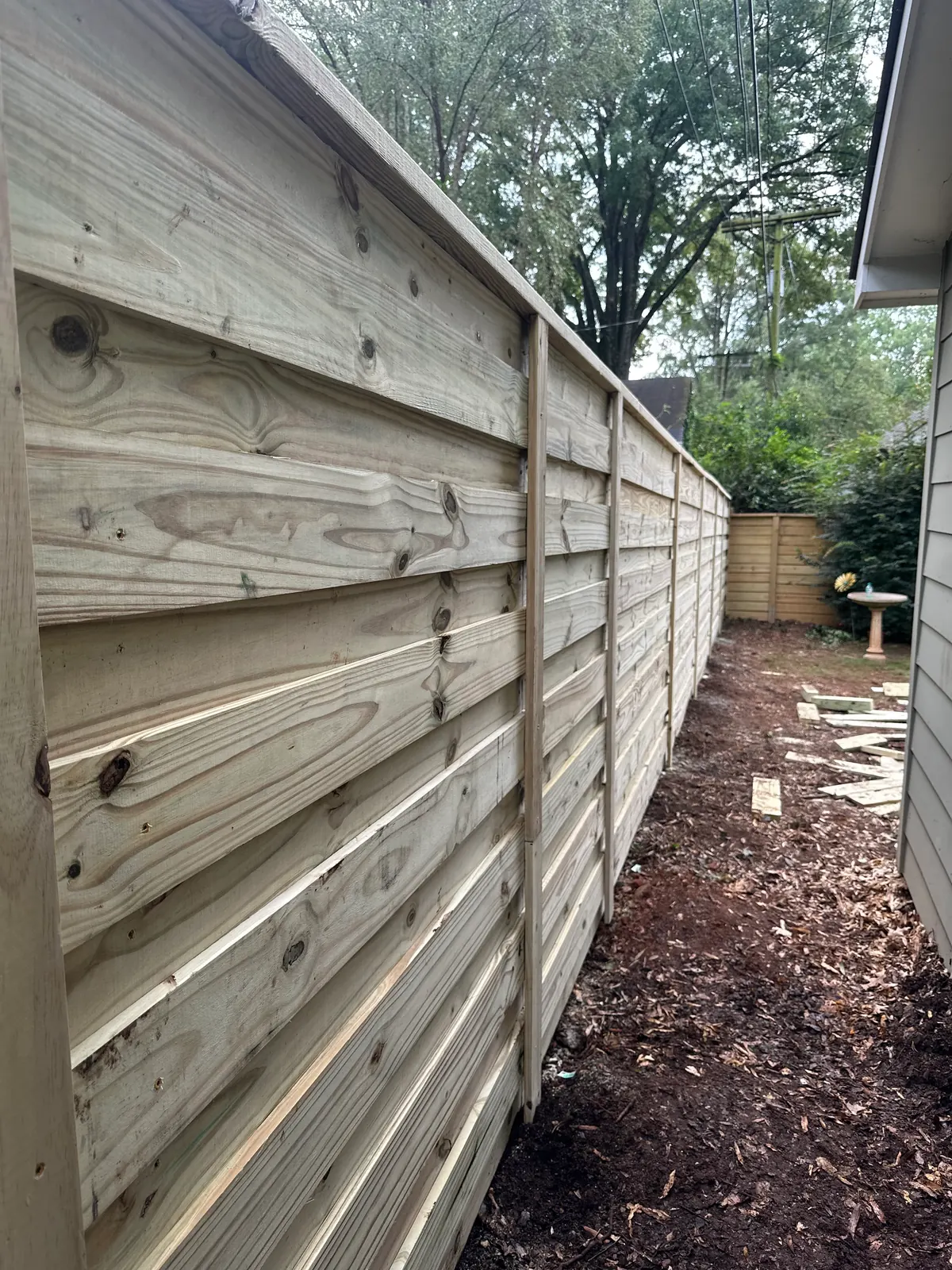
We have built horizontal fences in several layouts around Charlotte, and we have job photos of the first three to show you.
- 4 ft horizontal: a low fence for front yards, courtyards and garden edges, where it defines the space without closing it off.
- 6 ft horizontal privacy: boards set tight to one another for a solid backyard screen.
- 6 ft horizontal semi-privacy: boards set with an even gap between them, which lets light and air through and lightens the look.
- Horizontal board on board: two overlapped layers for privacy that holds even after the wood shrinks.
Horizontal Fence Installation That Stays Straight
Layout comes first, and it is fussier than on a vertical fence. Post spacing sets the panel width, so we plan it to land evenly along each run instead of leaving one odd, narrow bay at a corner.
Posts are set in concrete and checked for plumb and for alignment with each other, because a post that is slightly out throws off every board that lands on it. Boards go on from the bottom up with a spacer to keep each course level and the gaps equal. Mid-span backers are fastened behind the boards. Board ends are joined on a post, never floating in the air. Steel posts are a good match for this style since they do not twist and pull the boards out of line.
Swapping a Vertical Fence for Horizontal
A lot of our horizontal work is replacement. The old fence is a tired vertical privacy fence, and the owner wants something that looks current.
The existing posts cannot be reused. Vertical fences are normally framed on wider post spacing than a horizontal fence can tolerate, and posts that have been in the ground for years are rarely worth building on anyway. Replacement means removing the old fence and footings, laying out new post locations, and building from scratch. If only the side facing the street or the patio matters to you, we can price horizontal for that stretch and a standard vertical style for the rest. Mixing styles that way is common and keeps the total down.
Horizontal Fences on Sloped Charlotte Yards
Grade is the big design question for this style here. A vertical fence can follow a slope smoothly. A horizontal fence generally should not, because boards running at an angle look wrong next to the level lines of a house. The usual answer is to step it: each panel stays level and drops at the post to follow the hill.
Stepping leaves a wedge of open space under the low end of each panel. On a gentle slope it is small. On the steeper lots common in parts of Mecklenburg, Gaston and York counties, it can be large enough for a dog to get under, and it needs a plan. We look at the grade during the estimate and tell you how the steps will fall. Many neighborhood associations also have a position on horizontal fences, so it is worth checking your covenants early.
Wood Choices for Horizontal Boards
Board quality shows more on a horizontal fence. Every board is at eye level along its whole length, so a crooked one cannot hide. Cedar is lighter and more stable as it dries, which is why it is a frequent choice for this style. Pressure-treated pine costs less and holds up well, but it moves more in its first year, so tighter post spacing and good backers matter even more.
Thicker boards resist bowing better than thin fence pickets. Tell us the look and budget you have in mind and we will recommend a board and a spacing that fit together.
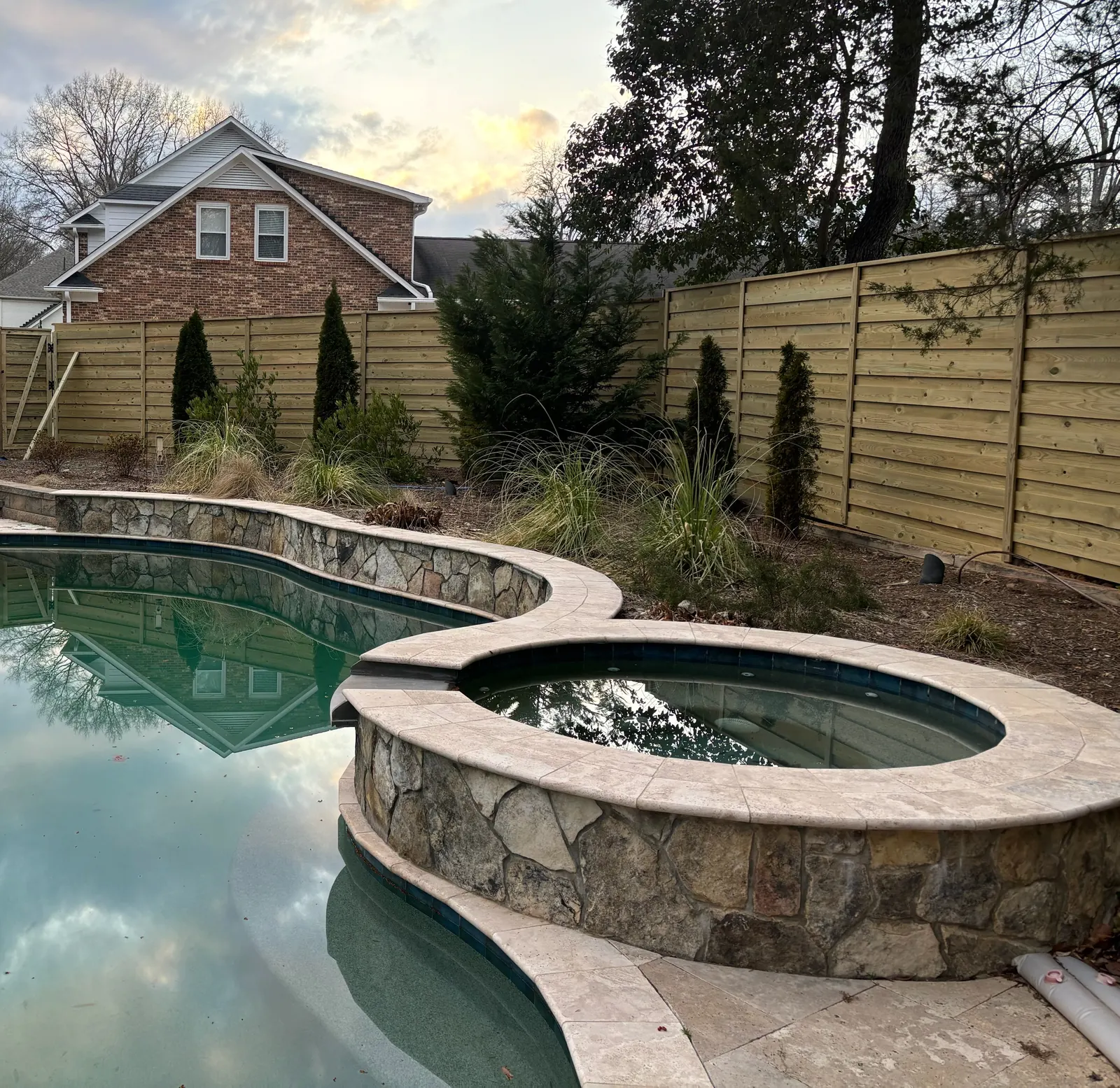
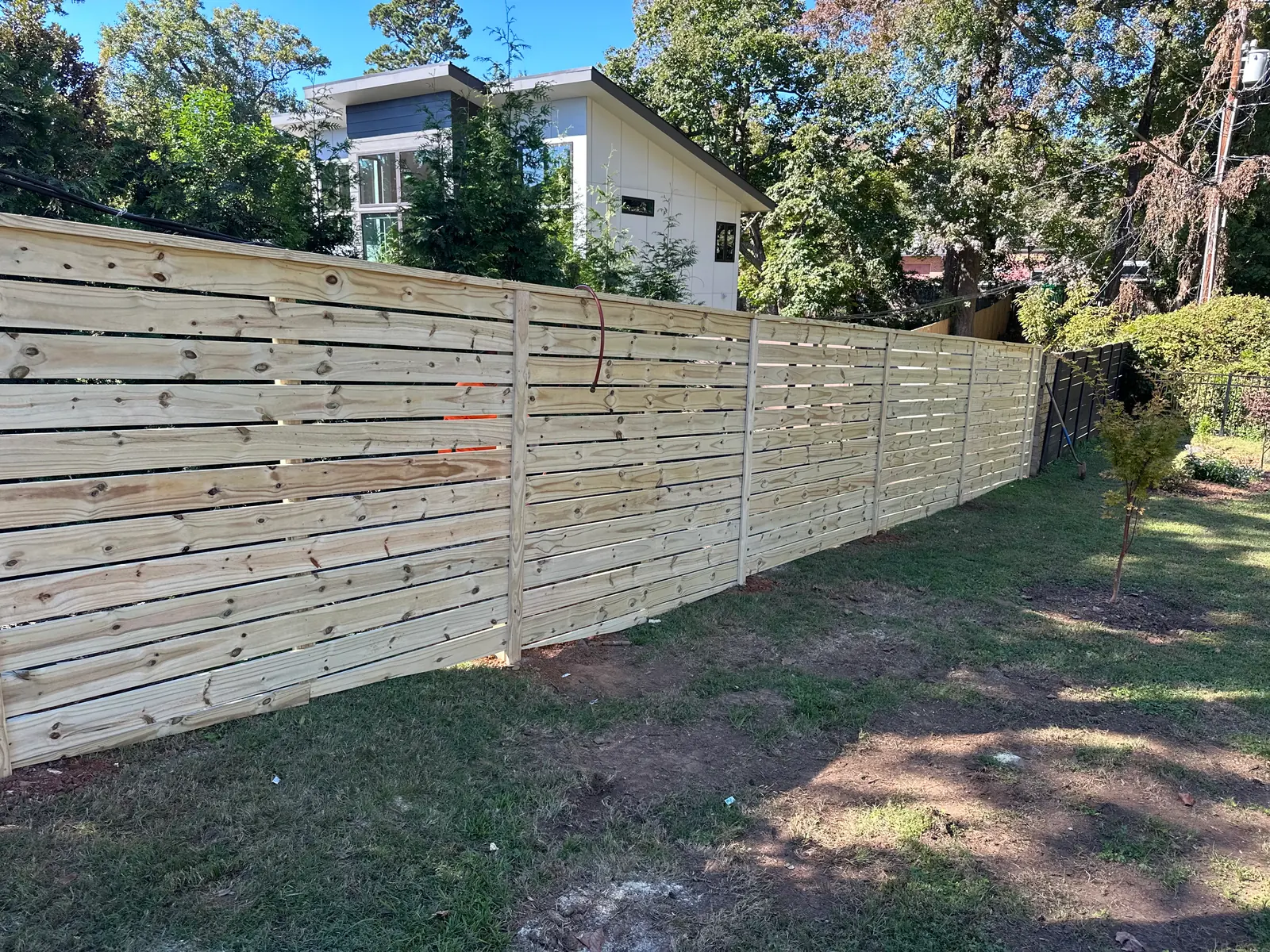
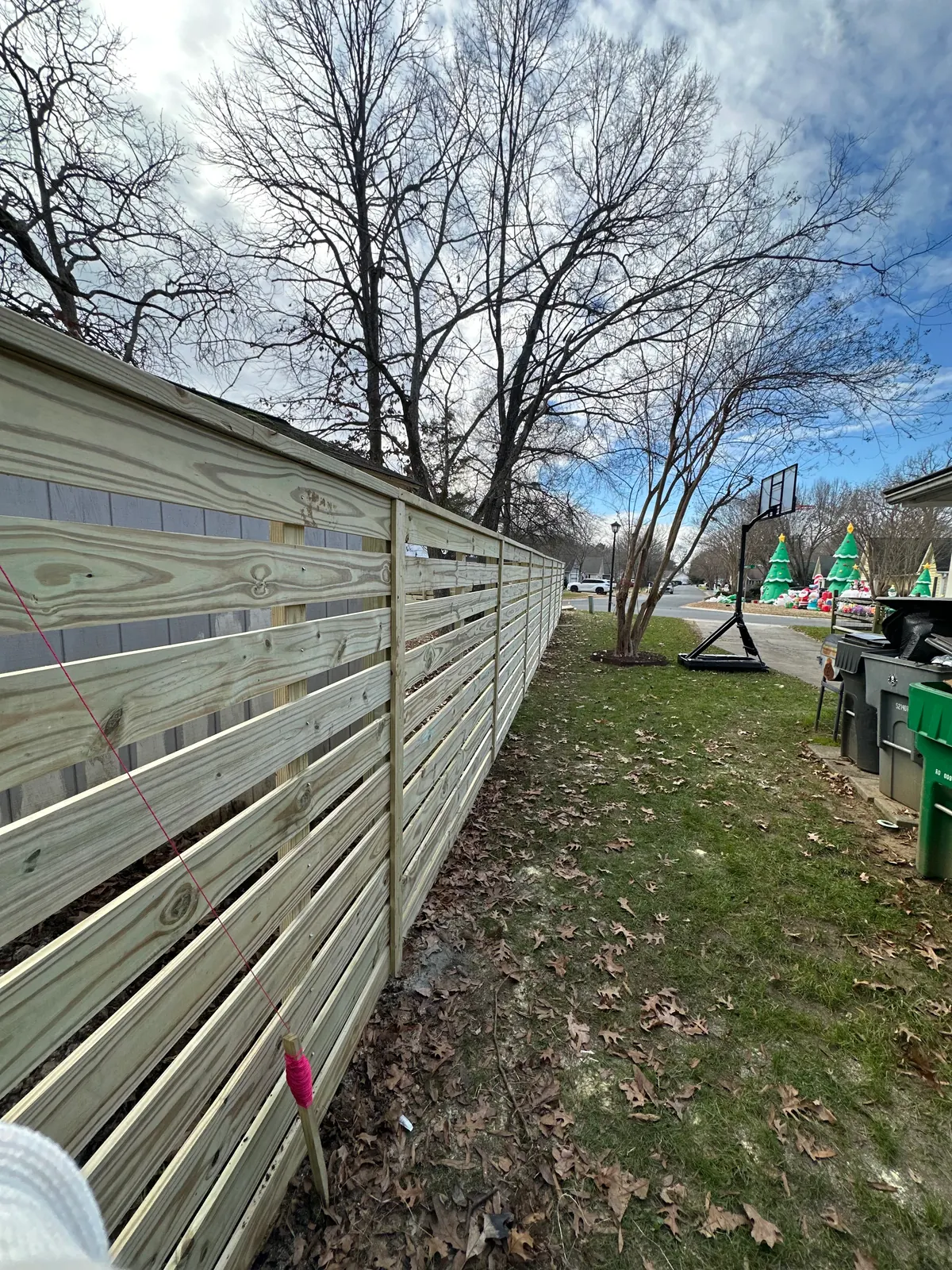
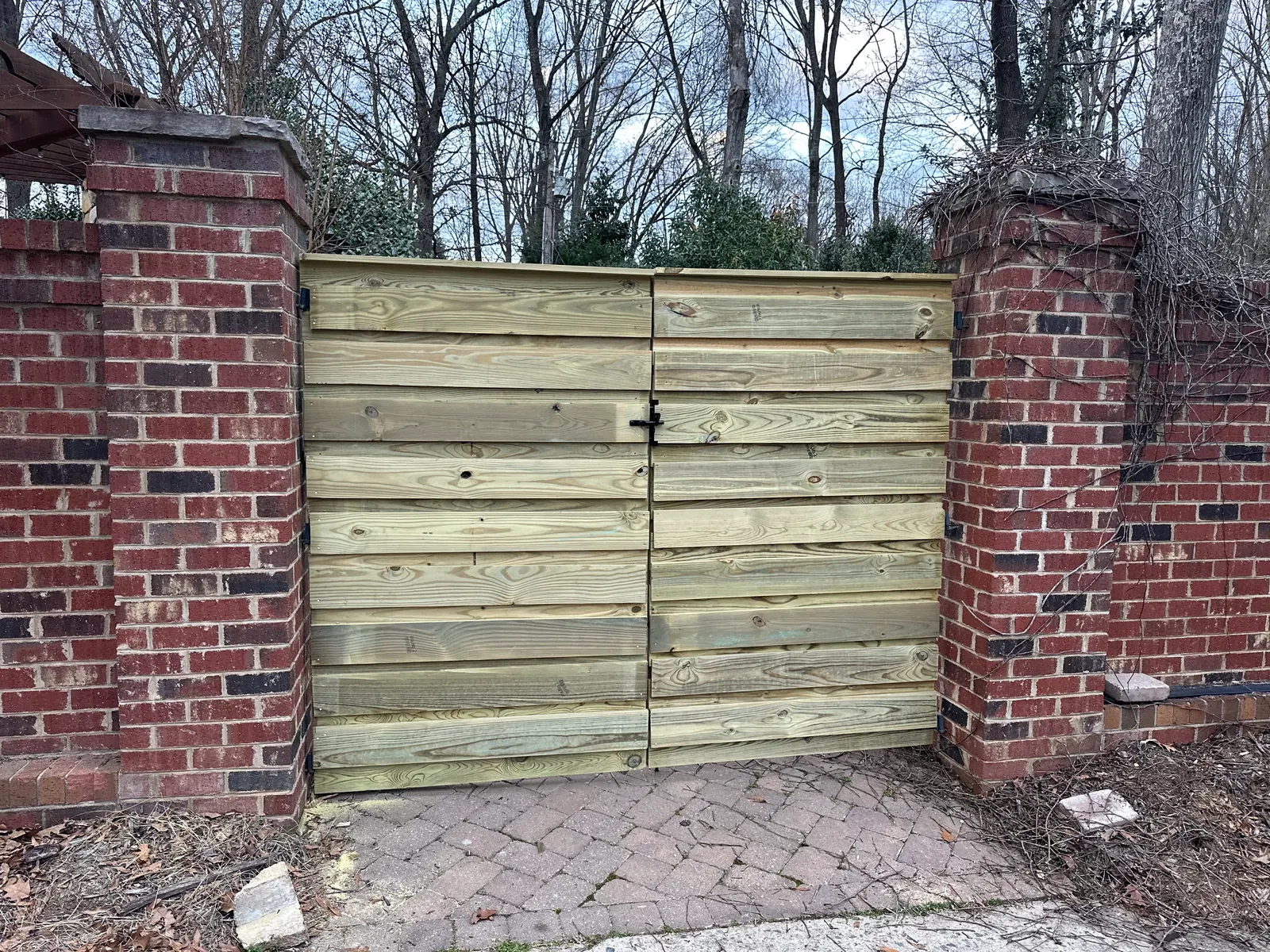
Horizontal Fences: Photos From Our Jobs
These are our own installs. See more in the fence installation photo gallery.
Questions About Horizontal Fences
Do horizontal fences sag?
They can if they are framed like a vertical fence. Long boards supported only at the ends will bow. We prevent it with closer post spacing, a vertical backer in the middle of each bay, and boards thick enough for the span. Built that way, a horizontal fence holds its lines.
Is a horizontal fence more expensive than a vertical one?
Generally, yes. It needs more posts per run, more careful layout, and often a better grade of board because every piece is on display. The gap depends on height, wood, and whether you choose privacy or semi-privacy spacing. We measure and give a written estimate for free, and can quote a vertical option alongside it.
Can a horizontal fence go on a sloped yard?
Yes, by stepping it. Each panel is built level and the fence drops at each post to follow the ground. That leaves a gap under the downhill end of every panel, which grows with the steepness of the slope. We will show you where the steps fall and how to deal with the gaps before you commit.
What is the difference between horizontal privacy and semi-privacy?
Board spacing. A privacy version sets the boards tight together so you cannot see through. A semi-privacy version leaves a consistent gap between courses, which lets air and light through and gives a slatted look. From across a yard, a semi-privacy fence still screens most of the view.
Will my HOA allow a horizontal fence?
It depends on the neighborhood. Some associations in the Charlotte area approve horizontal fences, some limit them to certain locations, and some only allow traditional vertical styles. Check your covenants or ask the architectural committee before you settle on a design. We can supply the drawing and material details they usually ask for.
Should I use cedar or pine for a horizontal fence?
Cedar stays straighter as it dries and looks cleaner, so it is the better performer for this style. Pressure-treated pine is the lower cost choice and works when the frame is built for it. Many customers use steel or treated pine posts with cedar boards. We can price each combination for you.
Can you build a short horizontal fence for a front yard?
Yes. We build 4 ft horizontal fences for front yards, courtyards and garden borders. Front-yard height limits and setback rules vary by town and by HOA, so we check what applies to your lot before finalizing height and placement. A low horizontal fence also needs fewer boards per bay, so sag is less of a concern than at 6 ft.
Related Fences and Services
- Board-on-Board Fences
- Semi-Privacy Fences
- Wood Fences With Metal Posts
- Cedar Fencing Installation
- Privacy Fence Styles
- Residential Fence Installation
Areas We Serve
QC Fence Contractors installs and replaces fencing across the Charlotte metro in North Carolina and South Carolina. Pick the area closest to the property:
- Fence contractors in Belmont, NC
- Fence contractors in Huntersville, NC
- Fence contractors in Charlotte, NC
- Fence contractors in Matthews, NC
- Fence contractors in Ashbrook, NC
- Fence contractors in Harrisburg, NC
- Fence contractors in Concord, NC
- Fence contractors in Rock Hill, SC
- Fence contractors in Ballantyne, NC
- Fence contractors in Gastonia, NC
Listed under Wood Fence Styles in our full list of fence types we install.
Free Estimate: Horizontal Fences
Tell us about the property and what you want the fence to do. Or call (833) 691-3387.